Historically, San Francisco’s high home prices have kept all-cash purchases uncommon, at least compared with the rest of the U.S. After all, very few buyers have enough money to buy a $1.8 million house outright.
But that’s starting to shift. From April through June, an average of roughly 30% of sales in the San Francisco metropolitan area went to cash buyers, according to data from real estate brokerage Redfin. That reflected a marginal dip from the March through May period, but it was still the second-highest share for the metro area of any three-month period in Redfin’s data, which stretches back to 2011.
In fact, since mid-2025, cash purchases have been more common in the San Francisco area, which Redfin defines as San Francisco and San Mateo counties, than they have been nationally, where they now make up about 28% of sales. The last time that happened was in 2017.
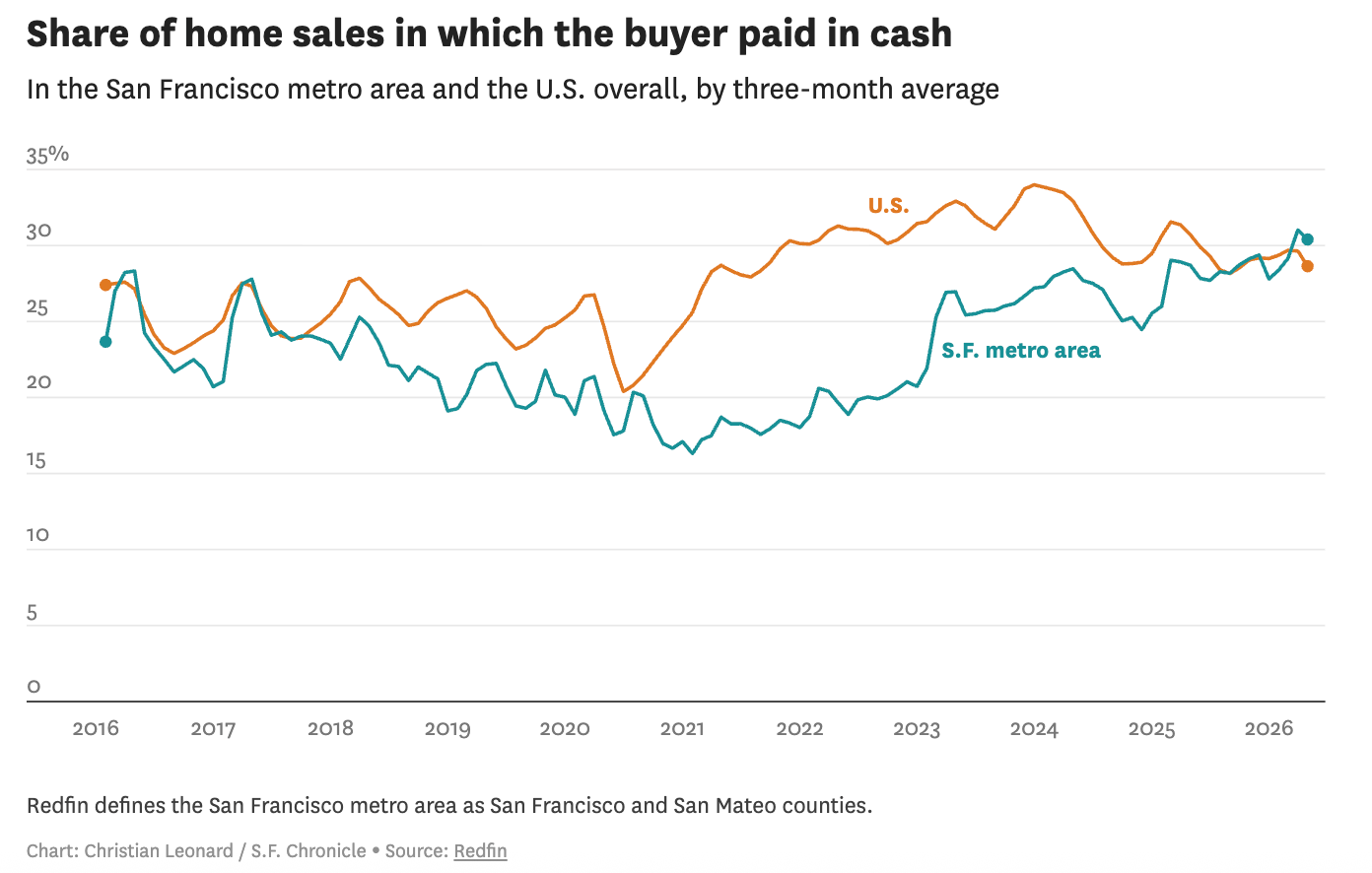
Purchasing a home with cash has become more common in the San Francisco metro area, but it’s become less common in the rest of the U.S. With housing markets cooling in much of the country, buyers have less incentive to sweeten their bid with a cash offer, which sellers typically prefer, Redfin said in a report earlier this year.
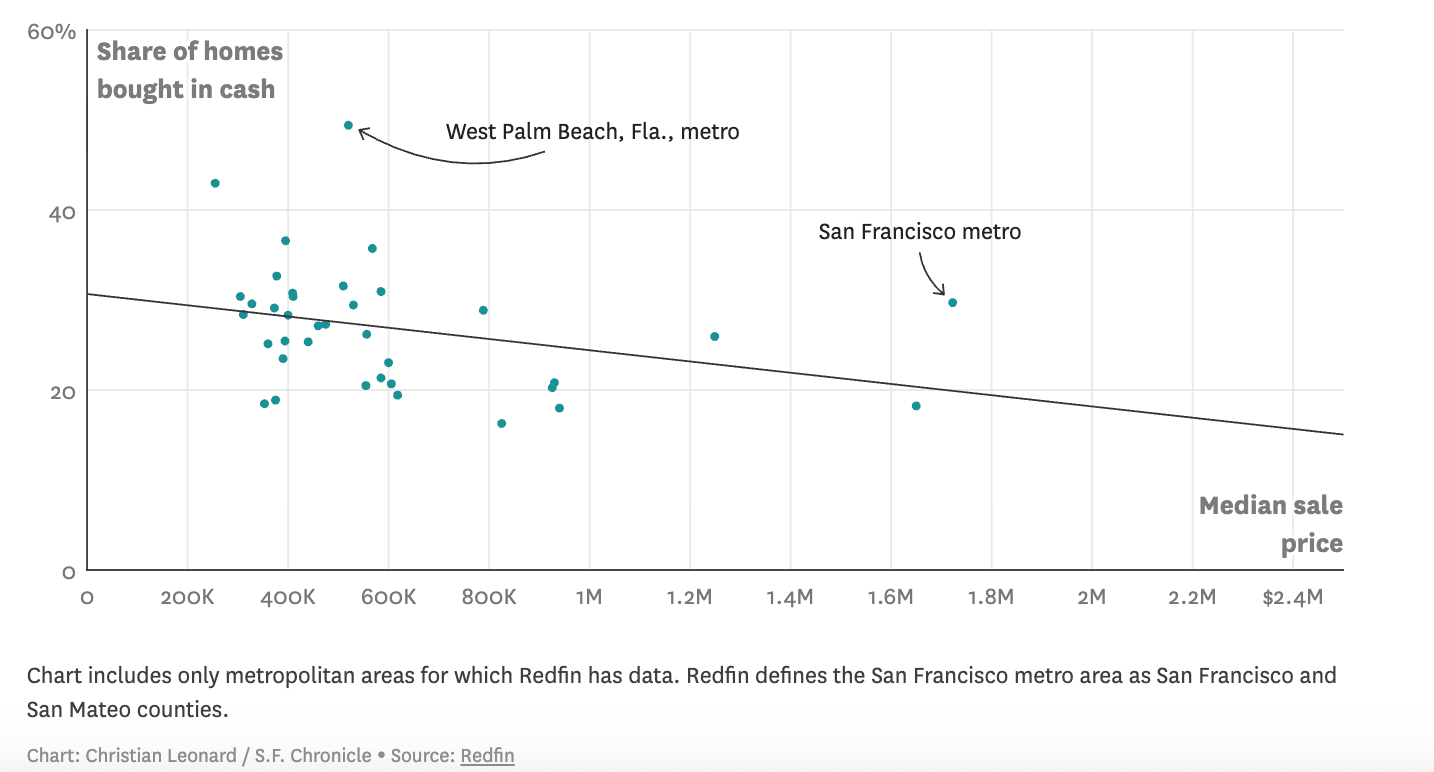
Still, buying in cash remains relatively common in regions with lower home prices, because buyers there can more easily purchase properties outright. In Florida’s West Palm Beach metro area, where the median sale price was about $520,000 in April, nearly half of the homes sold were purchased in cash. That area also attracts many wealthy retirees who have the resources to make an all-cash offer, according to Redfin.
But San Francisco, which has the highest median home price among major U.S. metro areas, bucks that trend.
Homebuyers are more likely to pay in cash in cheaper U.S. metro areas, but S.F. is an exception
Median home sale price compared with the share of homes purchased in cash among the largest U.S. metro areas in April 2026
While rising mortgage rates and a shaky job market have sidelined middle-income buyers, the artificial intelligence boom continues to bring in a deluge of wealth for some tech workers and investors. Armed with massive amounts of cash, these buyers have competed for a relatively small number of homes in the Bay Area’s most expensive neighborhoods.
Buying in cash comes with several advantages for those who can afford it. With it, a buyer can sidestep mortgage payments, which on a seven-figure home can run several thousand dollars a month in principal and interest. A cash offer also gives a seller more certainty that the deal won’t hit a last-minute financing snag, making the bid more attractive.
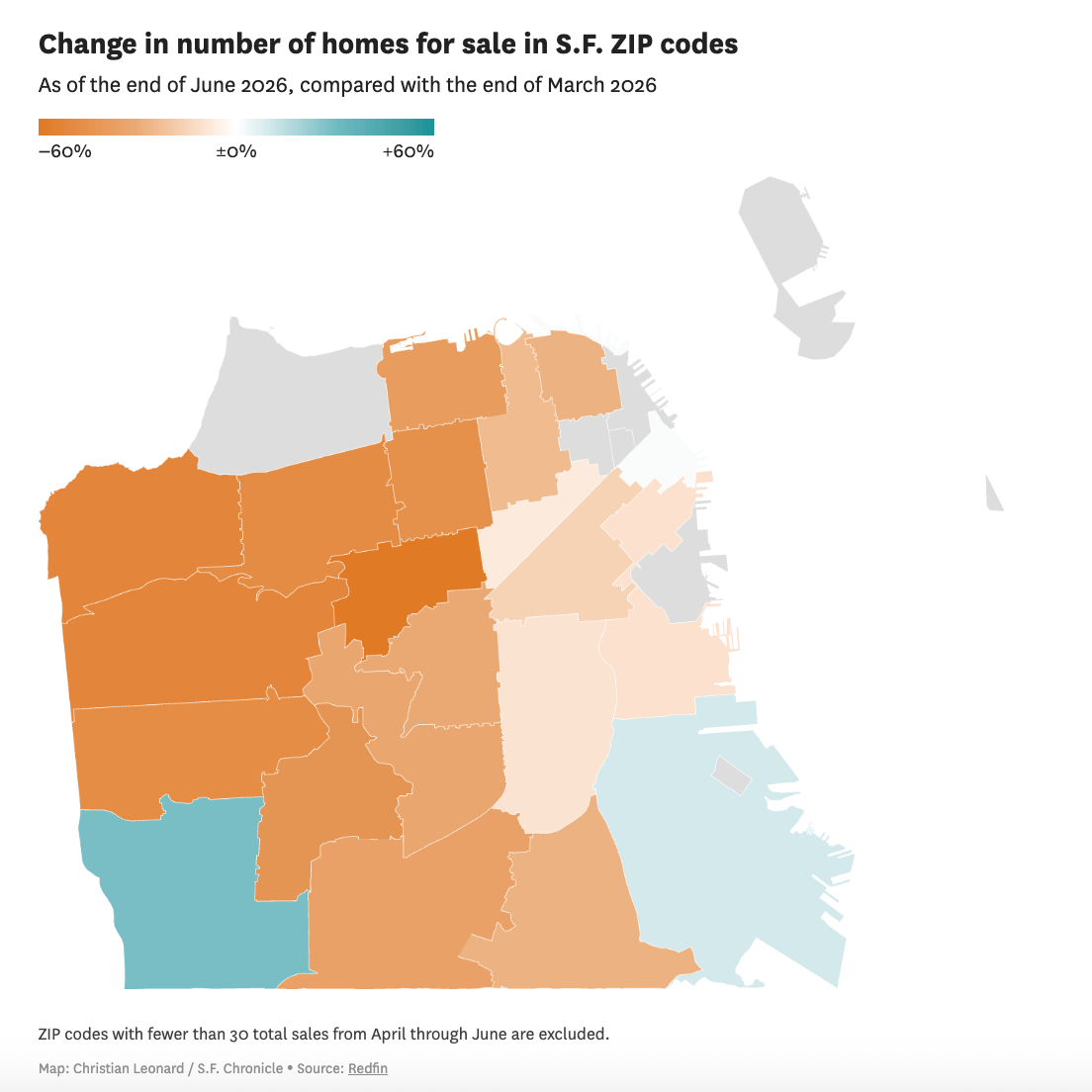
But the surge of demand for San Francisco homes is draining the city’s for-sale inventory of single-family properties and condos, which has fallen to its lowest level since before the pandemic. At the end of June 2026, the city had about 750 homes for sale, down from nearly 1,000 at the end of March 2026 and 1,220 at the end of June 2025.
With homes selling so rapidly, inventory in some parts of San Francisco, such as the Sunset District and Outer Richmond, has dwindled to just a few dozen properties.
Some home sellers — particularly at the low- and mid-price segments, which aren’t changing hands as easily as mansions and luxury condos — have started to delist their properties, further driving down inventory. And fewer homeowners are willing to sell because of the surge in prices, real estate agents say. While their properties have risen in value, it’s often not enough to cover the cost of another San Francisco home in the current market.
Author: Christian Leonard
Share:
