How the rise of artificial intelligence could reshape home prices, buyer demand, and real estate opportunities across San Francisco and the Peninsula.
The Bay Area has always been a place where innovation and real estate go hand in hand. From the early days of Silicon Valley to the tech IPO boom, major shifts in the technology industry have often influenced where people want to live and how much they're willing to spend.
Now, artificial intelligence may be setting the stage for another significant shift.
With AI companies such as Anthropic and OpenAI attracting enormous valuations and speculation about future public offerings, one question is gaining attention: Could the next wave of tech wealth drive Bay Area home prices even higher?
Luxury Homes Are Already Feeling the Impact
The influence of the AI industry isn't just a future possibility. Recent housing data suggests that higher-end properties have already experienced substantial appreciation.
According to Redfin data reported by the San Francisco Chronicle, luxury homes in the San Francisco metropolitan area, including San Francisco and San Mateo counties, reached a median price of nearly $7.5 million during July through September 2026.
That's approximately 23% higher than the same period in 2025 and more than 60% above 2019 levels.
Meanwhile, homes in the middle of the market have appreciated at a more moderate pace, highlighting the growing divide between luxury and non-luxury real estate.
What the Numbers Tell Us
The difference in appreciation between luxury and typical homes is especially interesting. While high-end buyers may have access to substantial stock-based wealth, the broader market continues to be influenced by affordability, mortgage rates, and available inventory.
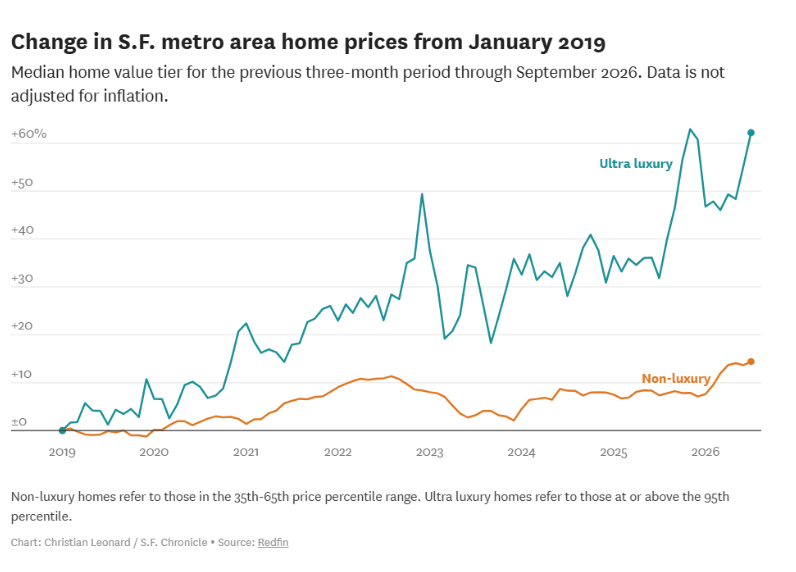
Chart credit: Christian Leonard / San Francisco Chronicle. Data source: Redfin. Figures are not adjusted for inflation.
Why the Peninsula Could See More Buyer Demand
San Francisco isn't the only market attracting attention.
As buyers explore options beyond the city, established Peninsula communities such as Hillsborough, Burlingame, Menlo Park, San Carlos, and San Mateo may continue to benefit from demand for desirable neighborhoods, schools, and convenient access to major employment centers.
According to Zillow data for September 2025 through September 2026, several local communities experienced notable home-value appreciation:
Hillsborough: Middle-tier home values increased 13%.
Burlingame: Middle-tier home values increased 12%.
Menlo Park: Middle-tier home values increased 10%.
San Carlos: Middle-tier home values increased 8%.
San Mateo: Middle-tier home values increased 6%.
While these increases cannot be attributed entirely to artificial intelligence, they demonstrate the continued appeal of Peninsula real estate.
Could the AI Boom Affect More Affordable Homes, Too?
It's easy to assume that new tech wealth will primarily influence multimillion-dollar properties. However, the impact could extend beyond luxury real estate.
Not every employee benefiting from an IPO will be shopping for a $10 million home. Some may use newly accessible equity to purchase their first condominium, move into a larger home, or enter communities that were previously beyond their budget.
That could create additional competition for smaller single-family homes, townhomes, and condominiums throughout the Bay Area.
Of course, there are important variables. Stock valuations fluctuate, mortgage rates influence purchasing power, and not every anticipated IPO results in the financial windfall employees expect.
What Does This Mean for Buyers and Sellers?
For homeowners and potential sellers: Growing demand from tech professionals could create opportunities, particularly for properties in sought-after locations. However, pricing, presentation, and a thoughtful marketing strategy remain essential. Not every home or neighborhood will experience the same level of demand.
For buyers: Staying informed and prepared may become increasingly important. Understanding your financing options, exploring different neighborhoods, and keeping an eye on both publicly listed and off-market opportunities can help you make confident decisions.
The Bigger Picture: Opportunity in a Changing Market
The Bay Area real estate market has weathered many economic cycles, and technology has consistently played an important role in shaping its future.
AI may bring another wave of opportunity, but it's important to remember that real estate is still fundamentally local. Inventory, neighborhood desirability, property condition, and individual financial goals all influence the decisions buyers and sellers make.
Whether you're considering selling, purchasing your first home, or simply curious about your property's value, understanding how these broader trends connect to your neighborhood can help you plan your next move.
Curious what these market shifts could mean for your home or neighborhood? I'd be happy to share local market insights and help you explore your options.